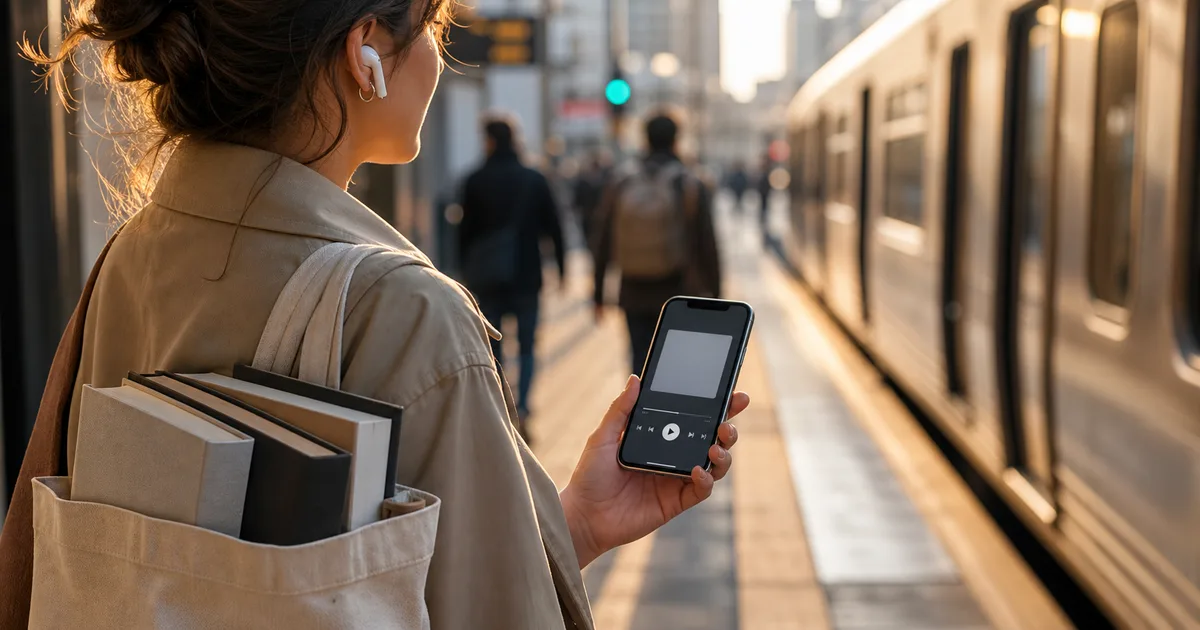
The best audiobook-friendly books are not always the same books that work best on paper. Audio rewards voice, pacing, clean structure, memorable scenes, and chapters that can survive interruptions. For commuters, walkers, and busy readers, the goal is not to prove that listening is as serious as reading. The goal is to choose books that fit the way attention actually works in motion.
This guide helps you pick audiobooks by listening situation: commute, walk, housework, travel, or low-energy evening. The recommendations lean toward books with narrative pull, practical ideas, or voice-driven appeal, with reminders to sample narration and confirm current Amazon format options before buying.
Quick Answer
For most busy readers, memoir, narrative nonfiction, practical business stories, and warm fiction are safer audiobook choices than dense reference books. Greenlights and Be Ready When the Luck Happens are good examples of books where voice and storytelling can carry the experience. If you need workplace usefulness, Never Split the Difference gives clearer listening takeaways than many abstract business titles.
Why Readers Search For This
Readers look for audiobook-friendly books because their available reading time is often not seated, silent, or uninterrupted. They may have a commute, a walking habit, a kitchen routine, or a long drive. The mistake is assuming every good book becomes a good audiobook. Some books rely on charts, footnotes, dense argument, or page-level concentration. Others become more vivid when heard.
The practical question is attention. A listener may miss a sentence because traffic shifts, a train announcement interrupts, or a child asks a question. The right audiobook can recover from that interruption. It has a clear line of thought, a strong scene pattern, or a narrator whose voice keeps the reader oriented.
Another misconception is that audiobooks should only be easy. They can be serious, useful, and challenging, but they should be suited to the listening environment. A difficult book may work on a long walk and fail during a stop-and-go commute.
The Decision Framework
Start with listening friction. If your listening happens during a commute, choose a book with short sections, clear scenes, or repeated examples. If your listening happens while walking, you can handle more reflection because the environment is steadier. If your listening happens while doing chores, memoir and narrative nonfiction often work better than dense instruction.
Then evaluate voice. A memoir can become much stronger when the narration feels personal. A business book can become easier to retain when examples are concrete. Fiction depends heavily on narrator fit; some readers love performed voices while others prefer restrained narration. Finally, choose the outcome. Do you want company, practical ideas, emotional warmth, or cultural context? Audio works best when it has a job beyond filling silence.
| Starting point | Best reader fit | Buying check |
|---|---|---|
| Greenlights | Listeners who enjoy memoirs with a strong voice. | Compare audio sample and print edition. |
| Be Ready When the Luck Happens | Food and memoir readers who like warm storytelling. | Confirm narrator and format options. |
| Unreasonable Hospitality | Workplace and service-minded listeners. | Check whether the business lessons fit your field. |
| Never Split the Difference | Readers who want practical negotiation ideas in audio. | Sample the narration pace. |
| Kitchen Confidential | Narrative nonfiction listeners who like personality and pace. | Confirm tone and mature content fit. |
| Remarkably Bright Creatures | Fiction listeners seeking warmth and momentum. | Preview narration style if available. |
Recommendation Notes
Greenlights works because memoir often thrives in audio. It is suitable for listeners who want a strong personal voice and a story-led experience. It may not fit readers who dislike celebrity memoir or prefer quieter prose.
Be Ready When the Luck Happens fits listeners who enjoy food, career, hospitality, and life stories. It is not a cookbook purchase; it is a narrative one. Buy it for company and perspective, not for step-by-step cooking instruction.
Unreasonable Hospitality is a practical listening choice for people who think about service, teams, restaurants, retail, or customer experience. It can be useful on a commute because the examples are concrete. Readers who want a traditional management textbook may prefer print.
Never Split the Difference is strong for listeners who want memorable negotiation ideas. The caution is that practical books often need notes. If you listen while driving, plan to revisit sections later rather than assuming everything will stick.
Kitchen Confidential is voice-driven and energetic. It is not gentle background listening, and some readers may prefer a calmer food memoir. Remarkably Bright Creatures gives fiction readers a warmer alternative when they want story rather than instruction.
Who Should Choose This Shelf
Choose this guide if your reading life happens around other responsibilities. It is especially useful for people who want to finish more books without turning every quiet moment into a task. Audiobooks can bring reading back into a week that has little sitting time.
It is also useful for readers who retain stories better than abstract lessons. A strong audiobook can make a walk feel companionable, a commute less wasted, and a household routine less repetitive.
Who Should Skip It For Now
Skip audiobooks for books you need to quote, annotate heavily, or study line by line. Also skip them if you know that listening becomes background noise and you rarely retain the main ideas. Audio is not a lesser format, but it is a different format.
If you are choosing a book for a group discussion with page references, print or ebook may be easier. If the book contains many lists, charts, or exercises, audio may require a companion format.
Alternatives Worth Considering
If audio is not right for the whole book, use it selectively. Listen to memoir, fiction, or narrative nonfiction, and read dense practical books in Kindle or print. Some readers like using audio for a first pass and ebook for notes. Others prefer audio only for books where voice matters.
The alternative is not audio versus reading. It is matching each book to the format that makes completion and recall most likely.
Buying Checks Before You Click
Before buying, sample the narration if a sample is available. Pay attention to speed, tone, and whether the voice feels sustainable for several hours. Confirm whether the product page offers audiobook, Kindle, print, or bundled options, and compare current pricing.
For practical books, decide where notes will live. If a book is likely to change how you negotiate, cook, manage, or think, audio alone may not be enough. You may want a notebook, ebook highlights, or a print copy later.
Common Mistakes
The biggest mistake is choosing a dense book for a distracted environment. Another is assuming a famous author automatically means a good listening experience. Narration matters. Pace matters. Your route, noise level, and attention matter.
A third mistake is using audio to avoid choosing. A long queue of unfinished audiobooks can feel like progress while creating the same clutter as an unread shelf. Keep the queue small and intentional.
How To Use This Guide Without Overbuying
A useful book list should reduce the number of impulsive choices, not increase them. Start by choosing one reading job. If the job is professional judgment, do not also try to solve relaxation, family routines, and long-term curiosity in the same cart. If the job is comfort reading, do not punish the book for being less instructional. The best purchase is the one that fits the next real reading window.
Open only two or three product pages at a time. Compare format, length, current edition, sample pages when available, and whether the title sounds like something you would return to after the first sitting. When a book is popular but vague for your need, save it for later. When a book is less flashy but clearly matches your next week, it may be the more useful choice.
For gifts, ask a different question: what kind of reading does this person actually finish? A commuter may value audio. A tired parent may value short, practical chapters. A new manager may value examples that can be applied quietly before the next meeting. Matching the format and the moment often matters more than choosing the most famous title in the category.
FAQ
What makes a book good for audiobook listening?
Clear structure, strong narration, memorable scenes, and recoverable chapters make a book easier to enjoy in audio.
Are audiobooks good for learning?
They can be, especially for examples and broad ideas. For detailed study, pair audio with notes, Kindle, or print.
Should commuters choose shorter audiobooks?
Not always. A longer book can work if the chapters are clear and the listening habit is consistent.
Reader-First Next Step
Choose by listening situation first. For voice-led memoir, compare Greenlights and Be Ready When the Luck Happens. For practical work ideas, start with Never Split the Difference or Unreasonable Hospitality and sample the narration before buying.
Listening Scenarios That Change The Choice
A commute book needs a different rhythm from a walking book. During a commute, the listener is dealing with stops, noise, traffic, transfers, and interruptions. Books with clear stories, strong scenes, and memorable examples survive that environment. Memoirs such as Greenlights or food-and-life narratives such as Be Ready When the Luck Happens can work because the voice carries the listener back into the book.
A walking book can be more reflective. The body is occupied, but the mind often has steadier space than it does on a train platform or in traffic. This is where a practical book like Never Split the Difference can work well. A listener can hear one idea, think about a real conversation, and return to the next chapter on the next walk. The key is to avoid pretending that every technique will be retained in one pass.
A chore book should be forgiving. Cooking, laundry, cleaning, and errands create repeated interruptions. Narrative nonfiction and warm fiction often fit better than dense instruction. Remarkably Bright Creatures gives story momentum, while Kitchen Confidential gives personality and pace. Neither requires the listener to hold a complex argument in memory for long stretches.
How To Pair Audio With Notes
For entertainment listening, notes may not matter. For work or self-improvement listening, they matter a lot. A good habit is to pause after each session and capture one sentence: what did this chapter make me notice? If the answer is vague, the audiobook may be enjoyable but not actionable. If the answer names a conversation, decision, or behavior, the book is doing useful work.
For Never Split the Difference, the note might be a question to try in a negotiation. For Unreasonable Hospitality, the note might be one way to make a customer or teammate feel seen. For memoir, the note may simply be a reflection that stays with you. All of those are valid, but they are different outcomes.
The best audiobook purchase is one you can place into a real routine. If you listen only during long flights, choose a book with immersive story. If you listen every morning for twenty minutes, choose a book with clean chapters. If you listen while walking at night, avoid books that make you feel more tense than you want to feel. The right book respects the setting.
Final Fit Check
Before buying an audiobook, imagine the first real session. Are you starting it on a noisy train, a quiet walk, a long drive, or while making dinner? That image should decide the book more than the bestseller position. A story-led memoir can be perfect for chores and wrong for focused learning. A practical negotiation book can be useful on walks and frustrating in traffic.
Also decide whether you want the audiobook to entertain, accompany, or change a behavior. Entertainment can be judged by momentum. Companionship can be judged by voice. Behavior change needs a place for notes. When the purpose is clear, the product page becomes easier to evaluate. You are no longer asking whether the book is good in the abstract. You are asking whether it fits the next listening habit you are ready to keep.
Editorial Notes And Affiliate Disclosure
Elite Bookshelf builds book guides from available Amazon US Books signals, category context, and reader-fit analysis. We do not claim hands-on testing, fixed pricing, or guaranteed outcomes. Product pages, formats, reviews, and availability can change, so confirm the current Amazon page before buying.
This article includes Amazon Associates links. If you buy through qualifying links, Elite Bookshelf may earn a commission at no additional cost to you.